Wednesday, 26 February 2014

Google debuts online education tool Oppia to help anyone create interactive activities for teaching others

Google debuts online education tool Oppia to help anyone create interactive activities for teaching others

Google Announces Quarterly Earnings
Google today launched a new online education tool called Oppia, currently an open source project with the goal of making it easy for anyone to create online interactive activities that others can learn from. Called explorations, these activities can be built and contributed to by multiple people from around the world through a Web interface, without any programming required.
Here is how Google describes its latest venture:
Oppia does this by modeling a mentor who poses questions for the learner to answer. Based on the learner’s responses, the mentor decides what question to ask next, what feedback to give, whether to delve deeper, or whether to proceed to something new. You can think of this as a smart feedback system that tries to “teach a person to fish,” instead of simply revealing the correct answer or marking the submitted answer as wrong.
And in typical Google style, here’s the YouTube video:
Google says Oppia does more than just present content: it gathers data on how learners interact with it and offers it to exploration authors so they can fix shortcomings in an exploration. For example, if many learners are giving an answer to which an exploration is not responding adequately (for example, the difficulty changes abruptly, or the next question appears to be unrelated), an author could create a new learning path for it. In this way, the exploration continues to get better.
Here’s Oppia’s current feature list:
  • Learners receive personalized, customizable feedback after submitting answers
  • Explorations are embeddable in any webpage
  • An online analytics dashboard that allows explorations to be improved easily over time
  • A full online editor GUI
  • A comprehensive extension framework allowing straightforward integration of new interactions and classification rules
  • Parameters can be associated with a learner in order to create a richer interactive experience
  • Collaborative creation and editing of explorations with version control
  • (in progress) Responsive UI for mobile devices
Unfortunately, there’s no indication of the amount of resources Google plans to dedicate to Oppia. The disclaimer “Oppia is not a Google product” seems to suggest the company is hoping a community forms and takes over.
Google’s reasoning for why Oppia exists is simple: the company believes online education can be delivered via more than just video, audio, and text. In learning, feedback is key, and as the company says: “one does not learn to play the piano by watching videos of many virtuoso performances.”

Tuesday, 25 February 2014

Jordy Leiser is co-founder and CEO of StellaService, a company that independently monitors and rates the customer service performance of online retailers. 

Starting a new company is difficult. The numbers say that 75 percent of startups fail, but that doesn’t change the fact that lots of people do it every day.
Inventing a new category, however, is downright herculean. It’s the most challenging path an entrepreneur may take, because it requires the greatest risk and elicits a tsunami of doubters.
But, when it works, it is capable of having profound impact on the world. And that’s one reason why I’m always inspired and surprised by category creators.
I often think of Henry Ford’s famous quote:  “If I had asked people what they wanted, they would have said faster horses.” 
There were dozens of other aspiring automaker-entrepreneurs in the early 20th century, but Henry ford is the one we remember and recognize. He started mass-producing the Model A and the Model T at a time when there was no mainstream market for automobiles.
Henry  invented a new category, and it turned out to be a business that changed the world.

Challenges ahead

Consider the volume of problems and questions that Henry Ford – and every category creator – must confront.
  • Will customers want it?
  • Will they even understand it?
  • How will it be produced?
  • Can it scale?
  • What are the unit economics?
  • What’s the distribution model?
  • Is there any acceptable margin of error?
  • How long (if at all) will it take mainstream America to change their behavior in order to adopt the product?
  • How much are customers willing to pay?
  • How often will they use it?
For a category creator, there’s no existing business process or strategy to follow. There’s no operating structure or revenue model to emulate. There’s no way to validate an ROI for the solution, and there’s no competitor around whom you can anchor pricing, since, well, no one offers a comparable solution. There’s not even evidence that a real market exists, let alone an estimate for how big it might be.
These questions and issues are just the tip of the iceberg.
If it’s so difficult to invent a new category, why do ambitious entrepreneurs proceed anyway?

An uncategorized problem

For some it’s about bringing a product or solution to the world that they personally wish existed. For others it’s about the passion for attacking problems others have not been able to solve. Sometimes it’s nothing more than a hobby that twists and turns into a seemingly marketable business opportunity.
In any case, these entrepreneurs must possess even larger and more irrational levels of tenacity and resiliency than other founders to get their businesses off the ground, given the meteoric odds stacked against them.
Inventing a new category doesn’t necessarily mean you need to dream up a completely new, tangible product. Instead, it could be a new form of packaging, formatting or selling an existing product (e.g. Amazon’s e-book revolution).
A new category could also mean a solution allowing people a different kind of entry point to an existing service (e.g. Uber for taxi’s and private cars, or ZocDoc for medical appointments).
On the other hand, a category creator is not looking for just a “better version” of an existing solution, containing more features, enhanced services or lower costs. Innovation is laudable, but it’s not the same as origination.
Virgin America, for example, is an innovative company with great service, but it did not create a new category. Virginsimply improved various elements of the flying experience versus the status quo.
Regardless, Virgin Founder Richard Branson did have some compelling advice for category creators. He wrote in his book Business Stripped Bare that “every business… operates according to its own rules. There are many ways to run a successful company. What works once may never work again. There are no rules. You don’t learn to walk by following rules. You learn by doing.”
The most salient characteristic of a category inventor is that they must make a new market, and learn that market as they go. I define a new market as an original value proposition created for an end customer, with unique production processes and cost/value alignments that have never been borne out before.
Here are a few of my favorite examples of companies and entrepreneurs at various points on the inspiring path of category creation:
Steve Jobs is probably the most famous category creator of the last 15 years. While he played a major role in the digital transformation of the music industry when Apple released iTunes and the iPod, I believe the iPhone was an even bigger new category.
It’s hard to believe that before 2007 our cell phones could only make and receive calls. Today, there are more than 1 billion mobile phones circulating the globe, used by people to shop, take pictures, video chat and do just about anything they want from a tiny computer they still call their phone.
It’s also worth noting the multi-billion industry of mobile apps that was also created as a result of the iPhone.
Tesla & SpaceX
If Steve Jobs is the most famous category creator, Elon Musk is the most ambitious. After co-founding Paypal (a category creator in its own right), Musk has started several other category-creating businesses, one of which is Tesla Motors.
Tesla was the first company to mass-produce and sell a highway-capable all-electric car, the Tesla Roadster. SpaceX, another Musk creation, is the first privately funded company to launch, orbit and recover a spacecraft. The company also has ambitions to colonize Mars.
Clearly, Musk is not interested in starting a business unless it comes with the immense challenge of inventing a new category of products or services.
Athlete’s Performance
If you know anyone who plays professional football, baseball or any other professional sport, they will know about Athlete’s Performance. However, the highly-touted performance training company is pursuing a far bigger business than just fine-tuning the world’s most elite athletes.
Leveraging its physical training and nutritional expertise, the company has also developed a first-of-its-kind corporate wellness solution called Core Performance designed to optimize performance of employees through proactive and prescriptive health programs.
It’s the start of a new category that could transform the way everyday employees at big companies think about and manage their health and fitness.
Founder Mark Verstegen and CEO Dan Burns have signed on early clients that include Intel, Google and Adidas, and the way they’ve designed, implemented, staffed, priced and scaled this new type of “human performance” solution is completely unique for this exciting new category.
I expect big things out of them, especially with healthcare grabbing America’s attention in the past year.
Catchafire
If it’s possible to build a huge, profitable business around a mission-based solution, Catchafire is going to do it. Started in 2009 by Rachael Chong, Catchafire helps match professionals who want to volunteer their skills with nonprofits that need their help.
Skills-based volunteering is nothing new – pro bono lawyers have been around forever. But Catchafire has developed a new way to infuse skills-based volunteering into the workings of big enterprises, which helps these big companies attract and retain the best talent, especially millennials.
This is a new type of solution for companies, and, like Athlete’s Performance, requires significant education to the target market.
Catchafire has had to plow through the tough, category-creating questions: How will companies use and implement this type of solution? What kind of impact will it have on employees? What’s the ROI to a business?
It will be exciting to watch Catchafire blaze a trail for this new category.

In conclusion

We know barriers are sky high for entrepreneurs who want to invent new categories. It can seem like an insurmountable challenge to get off the ground with no existing production, cost, pricing or distribution models to mimic.
However, if the formula turns out to be right, and with a little bit (or maybe a lot) of luck and hard work, you can – as Steve Jobs would say – make your dent in the Universe and start not just a business, but an entirely new way of life.

Facebook tweaks News Feed to show Page posts tagged with other Pages you like or follow, just like for friends

by Atul kuar

Facebook today announced a change to the News Feed algorithm that will treat Pages even more like people. If one Page tags a second Page you like or follow, you may see that post in your News Feed even if you don’t like or follow the first Page.

Facebook offers an example: this post below by the Bleacher Report might be shown in the News Feed to people who follow or like Dwight Howard, in addition to people who follow or like the Bleacher Report.
4 Facebook tweaks News Feed to show Page posts tagged with other Pages you like or follow, just like for friends
As you can see, Dwight Horward and James Harden are both tagged in the above post. If you haven’t liked or followed either, and you also don’t like or follow the Bleacher Report, the algorithm won’t consider showing you this Page post. This is exactly how updates from friends work: if a friend tags you in a photo, your friends may see the photo in their News Feed even if they’re not friends with the person who tagged you. If you’re not tagged, your friends won’t see it unless they are friends with the person who posted the photo in the first place.
Unlike on social networks like Twitter, where you see every update, there is still no guarantee you will see all such posts in your News Feed. Facebook still uses an algorithm that attempts to show you the best posts:
We look at many factors to make sure the most relevant stories appear in News Feed, including which posts are getting the most engagement (such as likes, comments, shares and clicks) across all of Facebook. We also consider which posts are getting the most engagement from people who like both the Page that posted and the Page that was tagged.
For example, if many people who like Dwight Howard also like the Bleacher Report, it suggests that these two Pages are connected. If we see that people who like both the Bleacher Report and Dwight Howard are liking the post above, that’s an indication that it may be relevant for people who only like Dwight Howard.
Facebook says it tested this feature for Pages and found that people liked seeing this type of content in their News Feeds. The company ran surveys and found these stories received “high scores.” Now the social network will undoubtedly be looking to see how the rest of its 1.2 billion people react.

why facebook is not paying too much too watsapp

by Atul kumar
For anyone who thinks Facebook paid too much for WhatsApp, I beg to differ.
Here are six reasons why Facebook underpaid for its latest acquisition.
1. Mobile phones are the new social platforms
During Web 2.0, only Facebook had your social graph. Now your contacts are on your phone and therefore your friends can be with you on any app. And mobile is the next computing platform that will be several times larger than desktop.
2. Messaging apps are the new social networks
Surprise! It turns out the main use of smart phones is communication. Seems obvious because the phone was invented to do just that.
So if people are inside a messaging app all day, that app can become a social network itself where one can install other apps like games etc.
Line and WeChat are a pioneers of this.
3. Privacy
Facebook took one-to-many broadcasting mainstream. This creates a lot of social anxiety because it’s too complicated to control who is going to see what.
The default emotion seems to be that everyone will see it, so you can only use it for posting things that will make you look good - but that, in turn, is annoying to see. Everything else you have to share in another place.
WhatsApp became that somewhere else because the core of the product is to control who you’re sharing content with. You can say that Facebook Messenger does this too, but people probably still associate the Facebook brand with social anxiety (that or some other reason, but otherwise Facebook wouldn’t have bought WhatsApp).
4. Engagement
A phenomenal 72 percent of the monthly active users (MAU) use WhatsApp every day. The only company with similar enduring engagement on this scale is Facebook with 62 percent.
But more importantly, on WhatsApp, every user shares 1.25 images per day vs. Facebook at 0.5. Probably because of point 3.
5. Growth
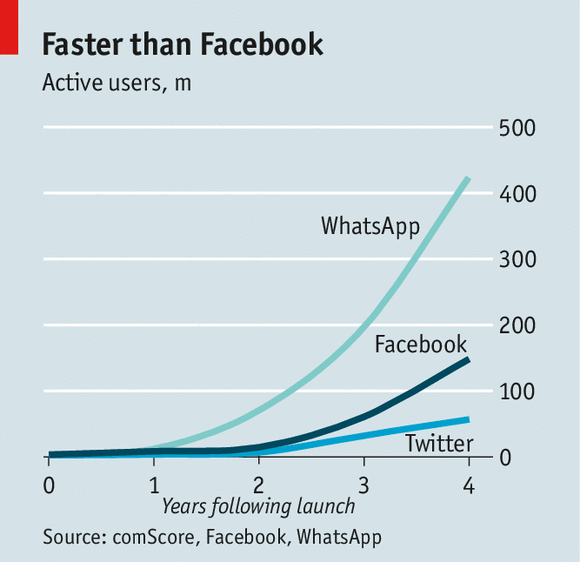
No other company ever grew as fast during its first four years as WhatsApp did. It’s at 450M MAUs and still adding 1M users every day.
Like Zuckerberg said, “it’s on a path to connect 1 billion people”.
20140222 WBC823 520x503 6 reasons why Facebook didn’t pay enough for WhatsApp6. Money
If WhatsApp were to start monetizing like Line at $7 per user per year it would have revenues of $3.15 billion.
If that calculation is too simplistic for you, here’s another way to look at it: Facebook’s market cap values a MAU at around $140. And it only paid $42 per WhatsApp MAU.
If we were to value WhatsApp at $140/MAU as well, its value is $63 billion. Not that it’s there now, but it gives you an idea why $19 billion is a really good price.
Do you agree with the points made above? Share your thoughts below.


Internet tools to improve your marketing starting

Aren’t shortcuts just the best?
While everyone else takes the long way, you and your shortcut get to breeze right through, skipping a few steps and feeling pretty smart doing it.
Finding a good marketing shortcut feels especially great, considering all that we marketers have to do in a day.
That’s why I went hunting for the top free marketing tools in a variety of marketing categories. These tools – all quick hits you can get started with easily – focus on everything from research and writing to benchmarking and analyzing. Here’s hoping you find the perfect shortcut for your work!

Research Tools

We’ll start at the beginning: researching topics, sites and ideas.
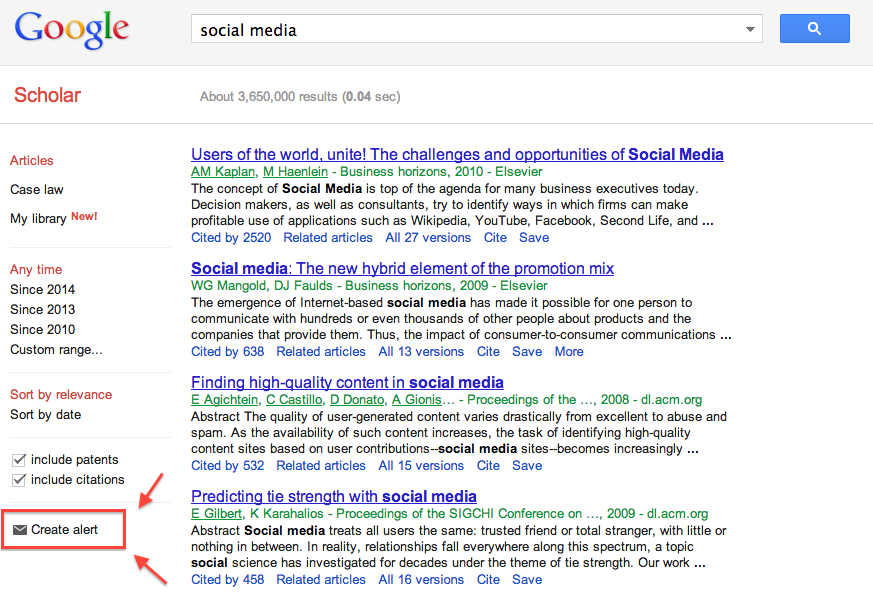
1. Google Scholar
I don’t know why more people don’t talk about Google Scholar, but I love this tool for researching science-heavy articles and digging into emerging studies. It limits your search to articles, theses, books, abstracts and court opinions, from academic publishers, professional societies, online repositories, universities and other web sites.
Pair it with a Google Alert to get amazing research on your topics of interest delivered right to your inbox.
Screen Shot 2014 02 07 at 6.43.54 PM 520x356 29 free Internet tools to improve your marketing starting today
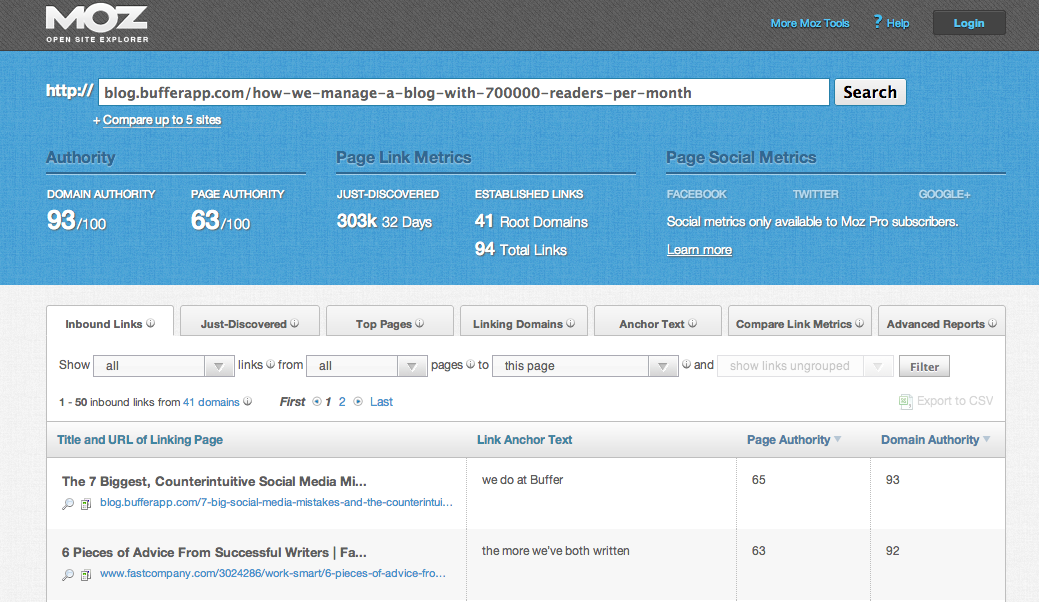
2. Open Site Explorer
Described as a search engine for links, Open Site Explorer  allows you to see a list of the sites that are linking to you – or another site.
Links are great for SEO, and this is great info for building better relationships with sites that like what you do, or even keeping an eye on competing sites.
Screen Shot 2014 02 09 at 4.59.55 PM 520x301 29 free Internet tools to improve your marketing starting today
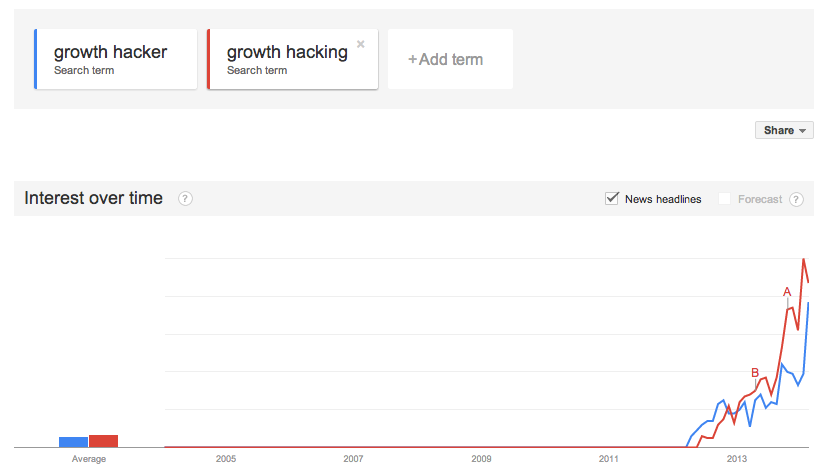
3. Google Trends
See what the world is searching for and how interest in concepts has changed over time with Google Trends.
For example, I feel like I’m suddenly hearing about “growth hacker” and “growth hacking.” Are you, too? I input those terms into Google Trends and it looks like there is a sudden new interest in the concept.
Screen Shot 2014 02 07 at 6.49.01 PM 520x294 29 free Internet tools to improve your marketing starting today

Ideation Tools

4. Blog Topic Generator
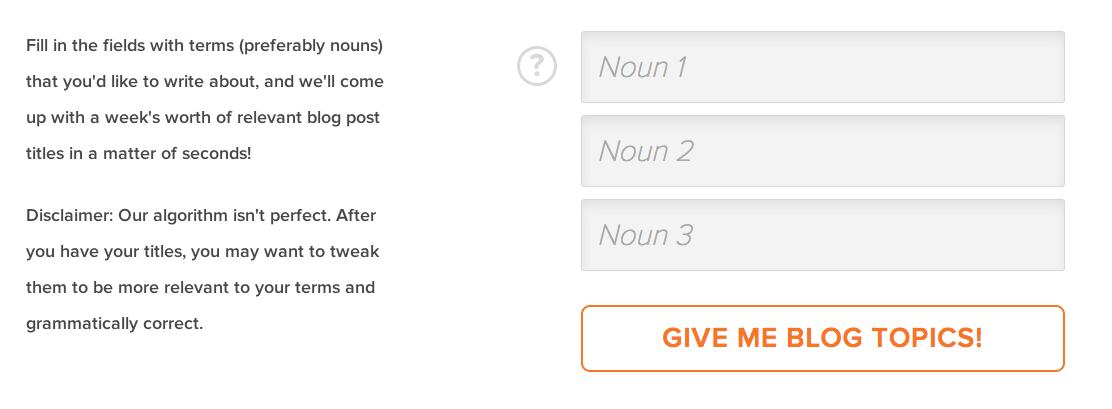
Stumped for ideas? Give Hubspot’s Blog Topic Generator a few nouns that describe your content areas and it’ll spit out a week’s worth of post ideas.
Screen Shot 2014 02 07 at 5.06.55 PM 520x191 29 free Internet tools to improve your marketing starting today
I put in the words “social media” “content marketing” and “aardvarks” (how could I resist?) and got the following:
  • 10 Signs You Should Invest In Social Media
  • Think You’re Cut Out For Doing Content Marketing? Take This Quiz
  • Miley Cyrus And Aardvarks: 10 Surprising Things They Have In Common
  • 15 Best Blogs To Follow About Social Media
  • What Will Content Marketing Be Like In 100 Years?
Not bad, huh? Which one do you want to read?
5. Content Idea Generator
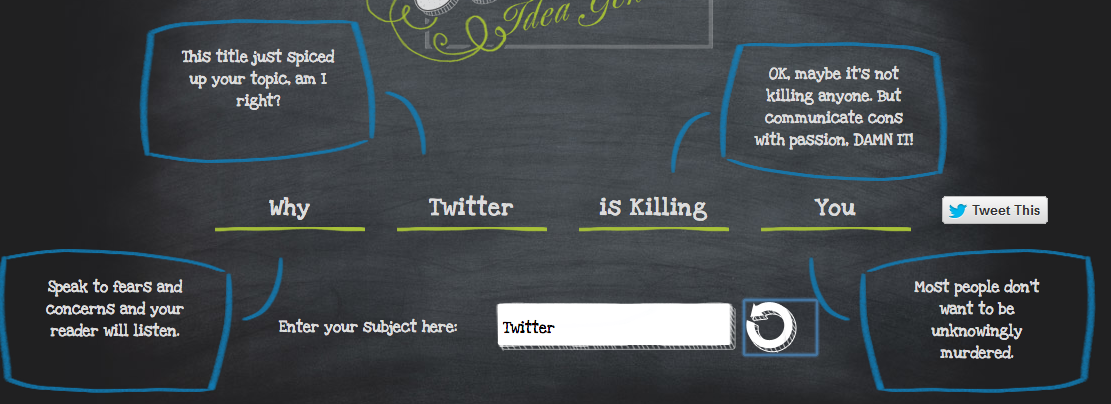
Enter a keyword for a fun, irreverent suggestion from Portent’s Content Idea Generator.
Screen Shot 2014 02 07 at 5.13.01 PM 520x189 29 free Internet tools to improve your marketing starting today
These tools offer help with readability, keyword density and spelling and grammar.
6. Readability
Drag the Readability bookmarklet to your toolbar to convert any content on the web into a simple, easy-to-read format with an estimate of how long it’ll take you. Also check out the other bookmarklet options here, including one that sends longer content to your Kindle to read later.
Screen Shot 2014 02 07 at 3.55.40 PM 520x161 29 free Internet tools to improve your marketing starting today
7. Hemingway
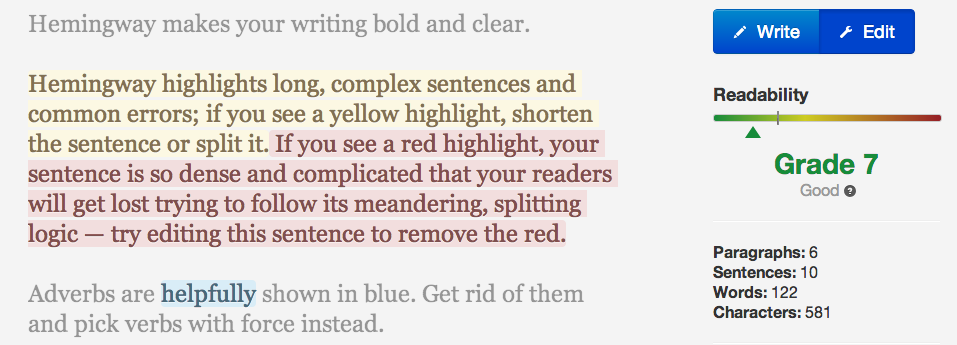
Simple, clear writing – we all strive for it. Get a little help with Hemingway. Paste a passage into the app and you’ll get an analysis that  highlights overly dense passages, unnecessary adverbs and more.
Screen Shot 2014 02 07 at 2.18.46 PM 1 520x187 29 free Internet tools to improve your marketing starting today
8. Onpage Optimization Tool
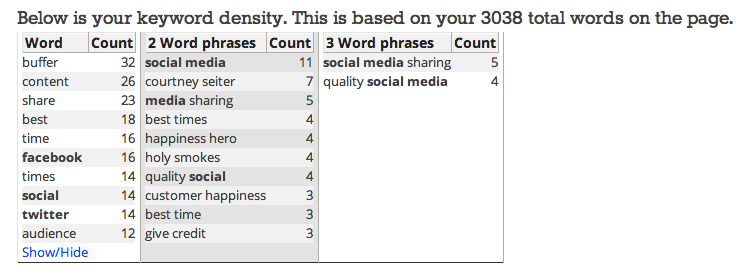
This free onpage optimization tool from Internet Marketing Ninjas is a one-stop look at what’s going on a specific page of your site. Toss in a URL and see stats on keyword density, internal and external links and more.
Screen Shot 2014 02 07 at 6.30.56 PM 520x192 29 free Internet tools to improve your marketing starting today
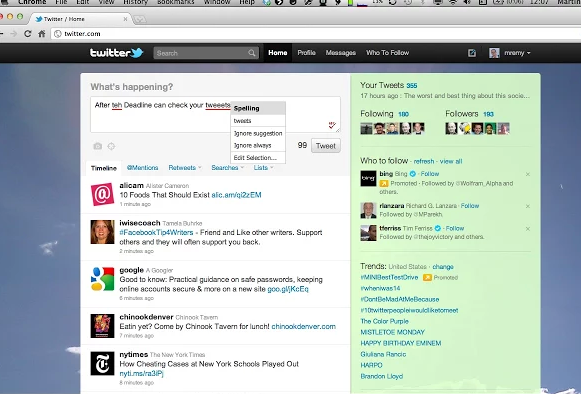
9. After the Deadline
A Chrome extension, After the Deadline checks spelling, style, and grammar wherever you go on the web.
Screen Shot 2014 02 07 at 7.44.22 PM 520x352 29 free Internet tools to improve your marketing starting today
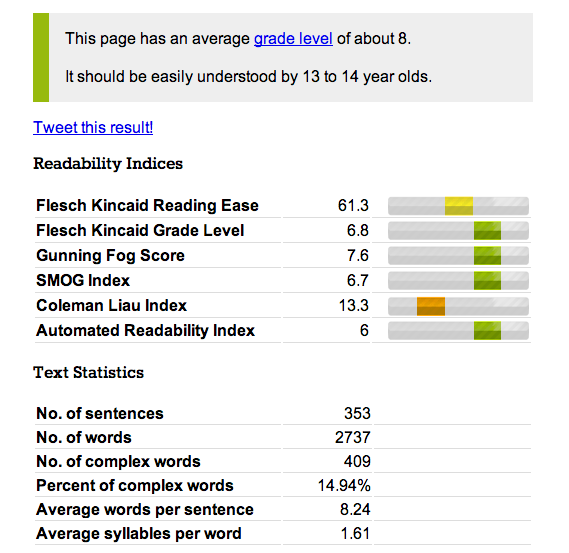
10. Readability Test Tool
Enter a web address or a block of text into the Readability Test Tool for an easy-to-understand analysis of your content. This tools measures a ton of different readability scores, and does a good job of explaining each one.
Screen Shot 2014 02 08 at 2.09.32 PM 520x505 29 free Internet tools to improve your marketing starting today

Twitter Tools

These tools help you maximize your Twitter presence, from timing to sharing to analysis.
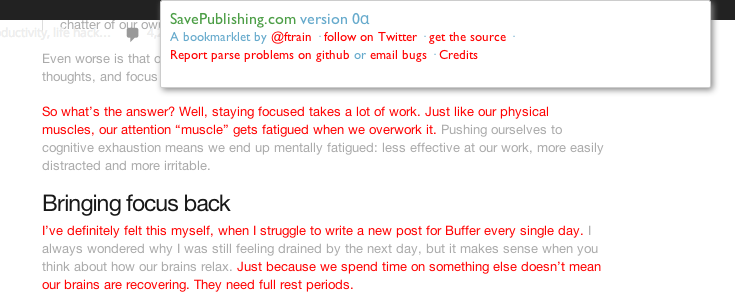
11. Save Publishing
Instantly find passages under 140 characters with Save Publishing, a handy bookmarklet that highlights tweetable passages on your screen. Post to Twitter with one click (or Buffer simply by highlighting a passage and clicking the Buffer extension)
Screen Shot 2014 02 07 at 2.21.29 PM 520x210 29 free Internet tools to improve your marketing starting today
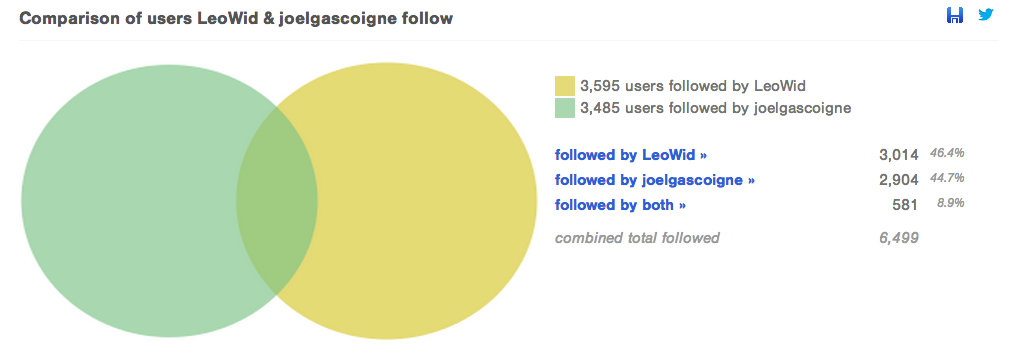
12. Followerwonk
We hope you’ve already heard of Followerwonk, one of Buffer’s many partners in amazing social media data. In addition to offering lots of super useful data about timing on Twitter, Followerwonk also has some other neat Twitter features, like the ability to compare followers of different accounts like so.
Screen Shot 2014 02 07 at 4.21.47 PM 520x183 29 free Internet tools to improve your marketing starting today
13. Latest.is
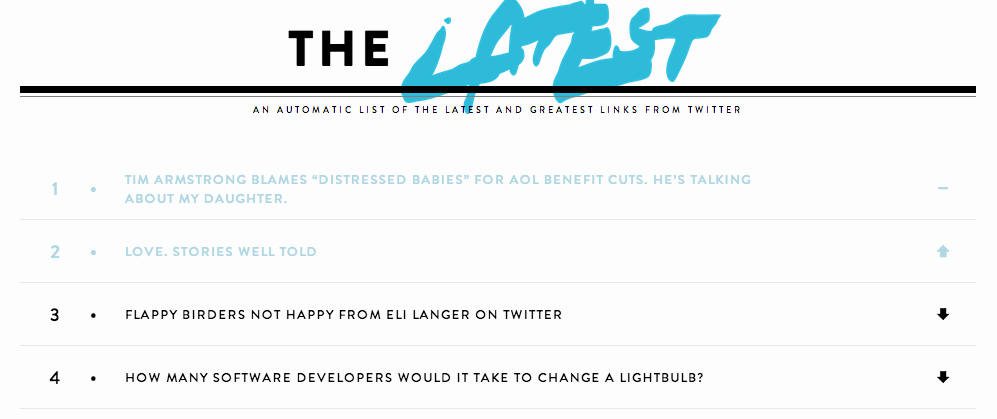
It’s not breaking news. It’s not nonsense hashtags. Latest.is is an automatically generated list of interesting links on Twitter, surfaced through an algorithm that focuses on “the people that always tweet the best links – first” (no, it doesn’t tell you who they are).
Screen Shot 2014 02 09 at 5.16.20 PM 520x218 29 free Internet tools to improve your marketing starting today
14. Tweriod
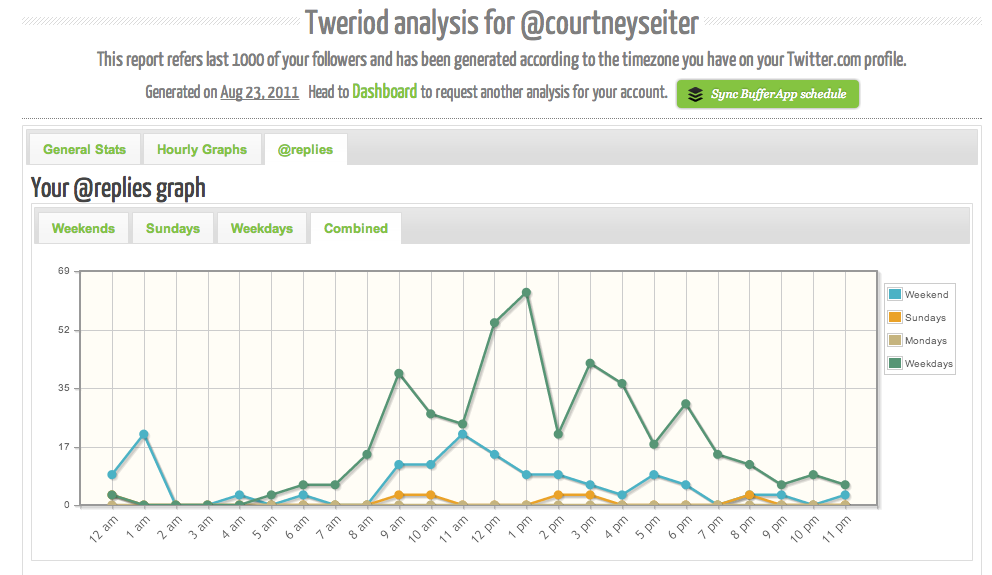
Tweriod analyzes your account to show you the best times to tweet for more exposure and replies. Bonus: Once you get your peak times, you can sync your Buffer account with them!
Screen Shot 2014 02 09 at 5.46.18 PM 520x301 29 free Internet tools to improve your marketing starting today
15. Must Be Present
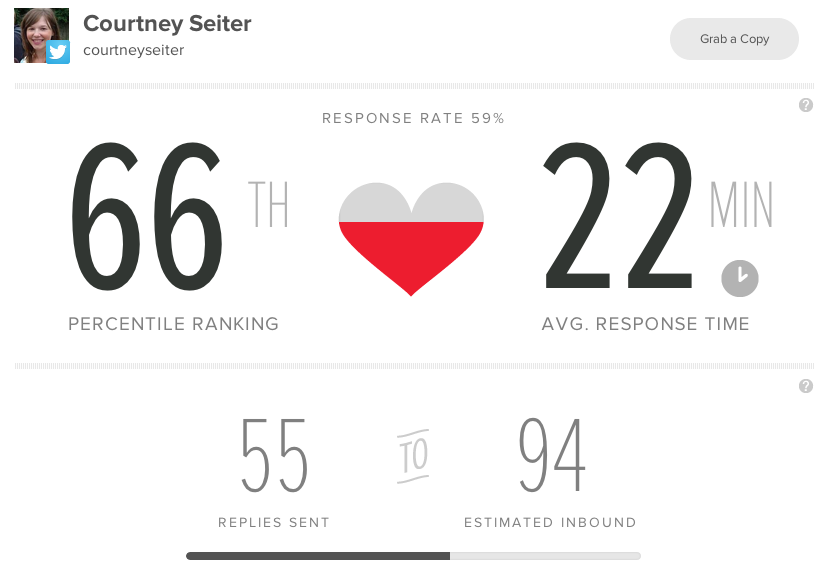
A free tool from Sprout Social, Must Be Present calculates how often and how quickly you respond to comments and questions on Twitter (in exchange for your email address and a bit of other info).
Screen Shot 2014 02 07 at 2.25.25 PM 520x360 29 free Internet tools to improve your marketing starting today

Facebook Tools

These tools analyze one or more Facebook pages to deliver an analysis or report on your activities – particularly important as Facebook is always changing.
16. Conversation Score
Discover any Facebook Page’s influence, engagement and performance with Conversation Score.
Screen Shot 2014 02 06 at 9.57.00 PM 29 free Internet tools to improve your marketing starting today
17. Wolfram Alpha Facebook report
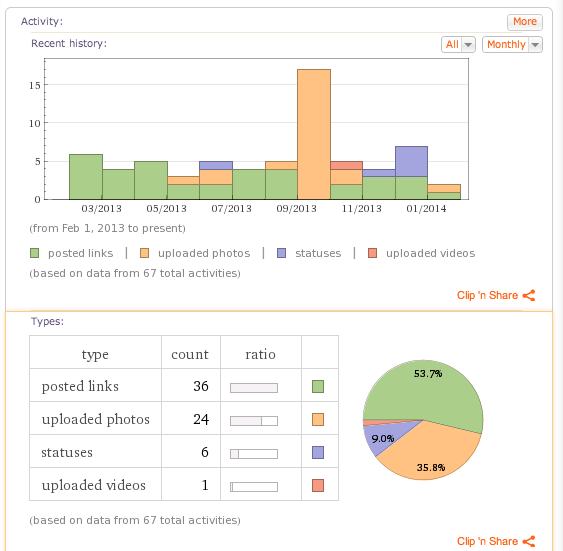
To analyze your own Facebook account and get lots of interesting data about your connection, the language you use, the times of day you post and more, try Wolfram Alpha’s Facebook report.
Screen Shot 2014 02 07 at 4.16.36 PM 520x508 29 free Internet tools to improve your marketing starting today
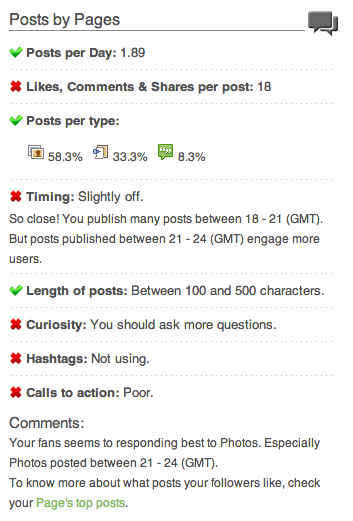
18. LikeAlyzer
LikeAlyzer provides you with recommendations and feedback on your company’s presence on Facebook based on metrics including presence, dialogue, action and information.
Screen Shot 2014 02 06 at 10.06.52 PM 29 free Internet tools to improve your marketing starting today
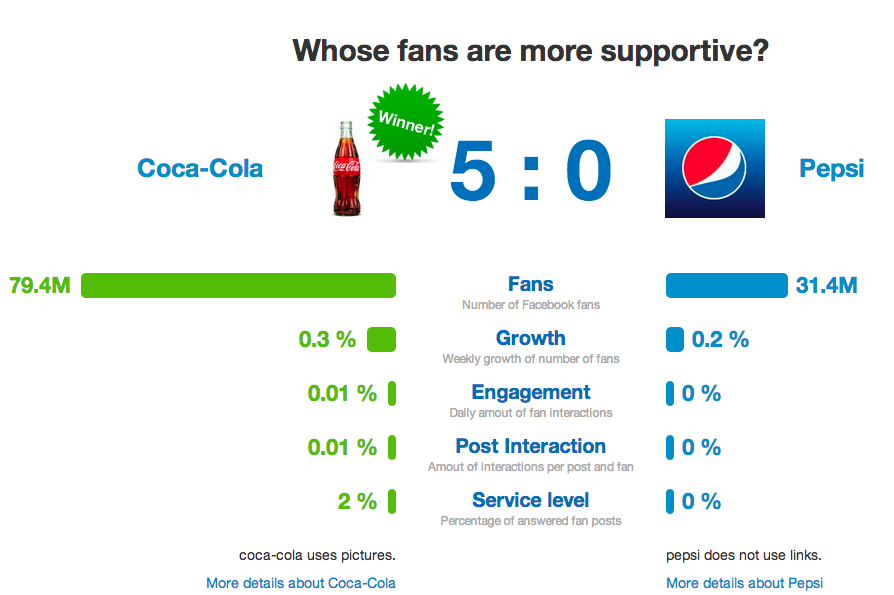
19. Fanpage Karma
Fanpage Karma is all about competition. Compare two fan pages by entering their names or IDs and see which ones comes out on top.
Screen Shot 2014 02 06 at 10.09.07 PM 520x346 29 free Internet tools to improve your marketing starting today
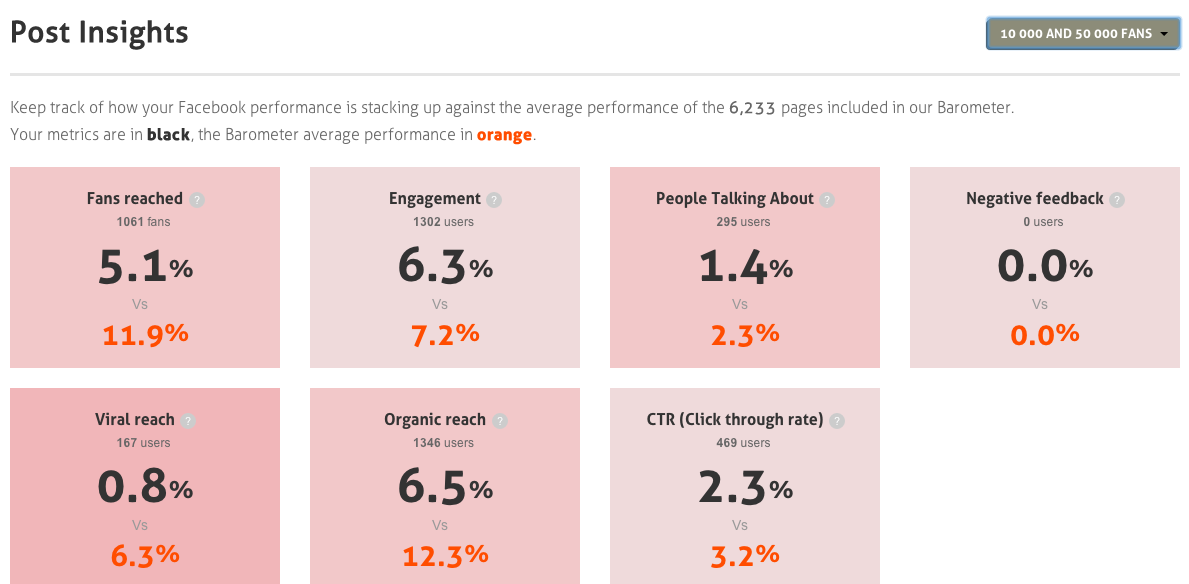
20. Facebook Page Barometer
Agora Pulse’s Facebook Page Barometer keeps track of how your Facebook performance stacks up against the average performance of 6,000+ pages.
Screen Shot 2014 02 06 at 10.04.27 PM 520x255 29 free Internet tools to improve your marketing starting today

LinkedIn Tools

These tools help you visualize and maximize your LinkedIn connections and presence.
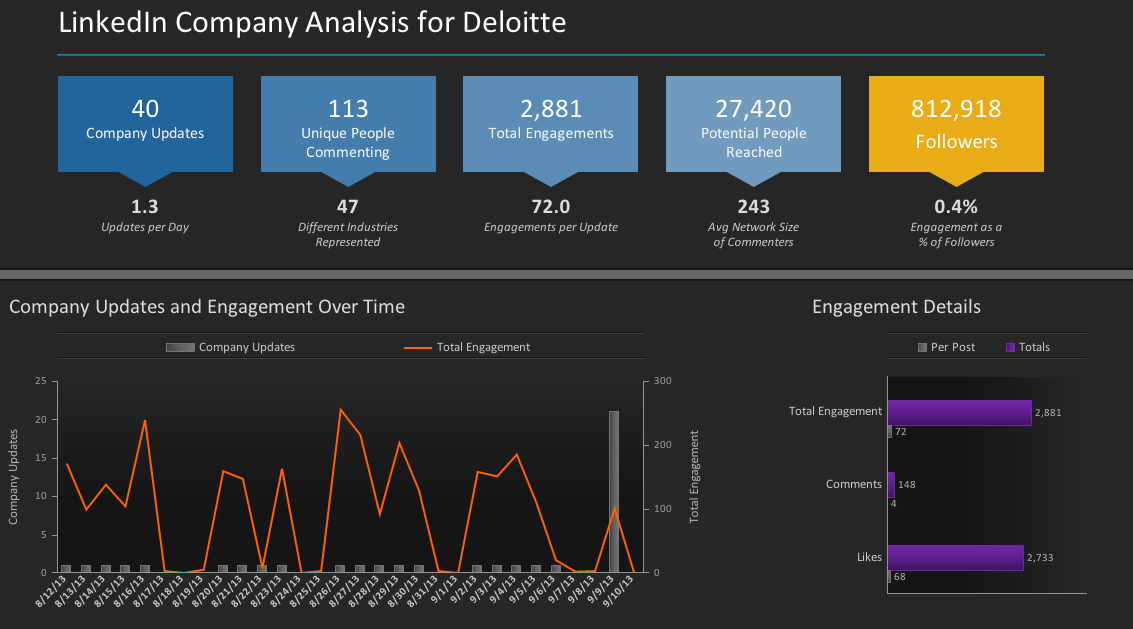
21. SimplyMeasured LinkedIn Analysis tool
Get beautiful view of the action on your LinkedIn Company page – including most active posters, top days and times and much more – with SimplyMeasured’s LinkedIn Company Analysis. SimplyMeasured has quite a few freebie tools worth a look.
Screen Shot 2014 02 06 at 9.58.54 PM 520x288 29 free Internet tools to improve your marketing starting today
22. LinkedIn Maps
How do all of your LinkedIn connections relate to one another and overlap? Plug your info into LinkedIn Maps to get a new view that might just help you understand and strengthen some relationships.
Screen Shot 2014 02 07 at 2.28.13 PM 520x341 29 free Internet tools to improve your marketing starting today

Relationship Tools

These tools focus on connecting with new people and strengthening relationships with existing connections.
26. Newsle
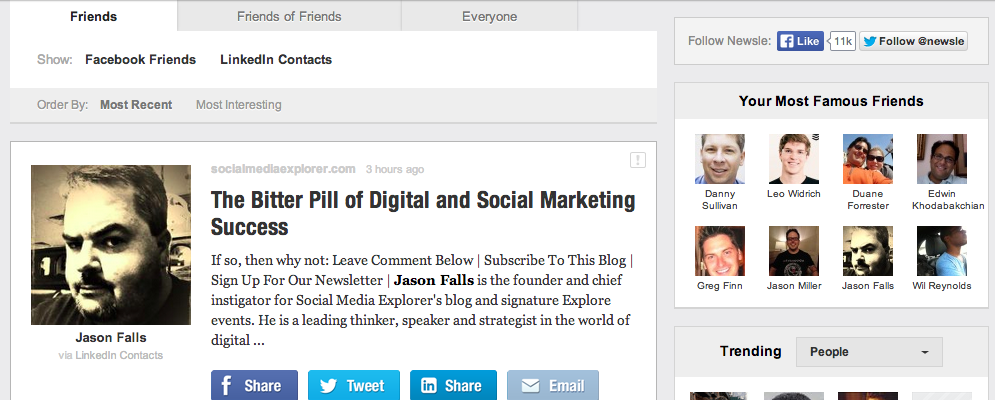
Got some thought leaders or industry influencers you want to keep up with? Sign into Newslethrough Facebook or LinkedIn and it’ll track your Facebook friends, LinkedIn connections & email contacts and let you know when they’re in the news.
Screen Shot 2014 02 10 at 8.37.38 AM1 520x209 29 free Internet tools to improve your marketing starting today
27. Rapportive
Make your email work harder for you by installing Rapportive, a Chrome extension that helps you get to know your contacts better by showing their photo, job, company, LinkedIn profile and recent tweets.
rapportive example 520x409 29 free Internet tools to improve your marketing starting today
28. MentionMapp
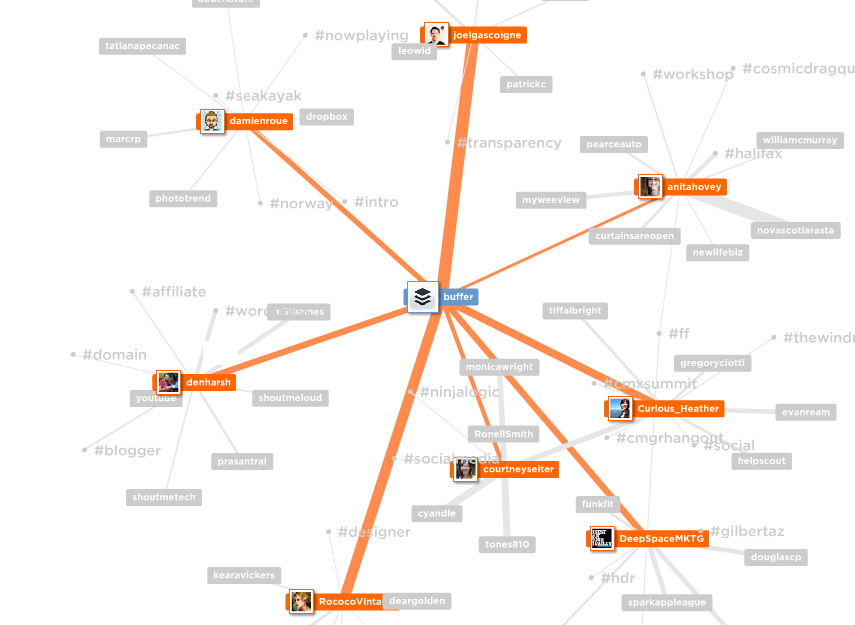
See how any Twitter user is connected to others with MentionMapp, which makes all your connections visual and simple to understand and explore.
Screen Shot 2014 02 09 at 4.29.52 PM 520x380 29 free Internet tools to improve your marketing starting today

Miscellaneous Tools

29. Down For Everyone Or Just Me?
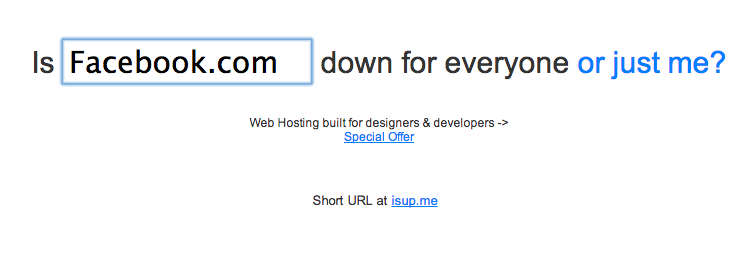
Is it your Internet connection, or is your site (or someone else’s that you’re desperately trying to reach) really down? Find out with this simple website. Just enter your site:
Screen Shot 2014 02 07 at 2.31.00 PM 520x181 29 free Internet tools to improve your marketing starting today
And it’ll let you know if it’s just you or if the site is, well, down for everyone.
Screen Shot 2014 02 07 at 2.31.17 PM 520x118 29 free Internet tools to improve your marketing starting today
What super useful marketing tools did I overlook? Share them in the comments to make this list even more helpful.

Website Analysis Tools

These tools give you an overall look at many different facets of your site or marketing strategy.
23. Quicksprout
by QuickSprout is a really comprehensive website audit, social media analysis and competitor report, all in one.
Screen Shot 2014 02 07 at 2.44.44 PM 520x336 29 free Internet tools to improve your marketing starting today
24. Marketing Grader
Hubspot’s Marketing Grader works similarly, offering you an overall look at the health of your marketing efforts in multiple categories.
Screen Shot 2014 02 07 at 7.38.03 PM 520x234 29 free Internet tools to improve your marketing starting today
25. SharedCount
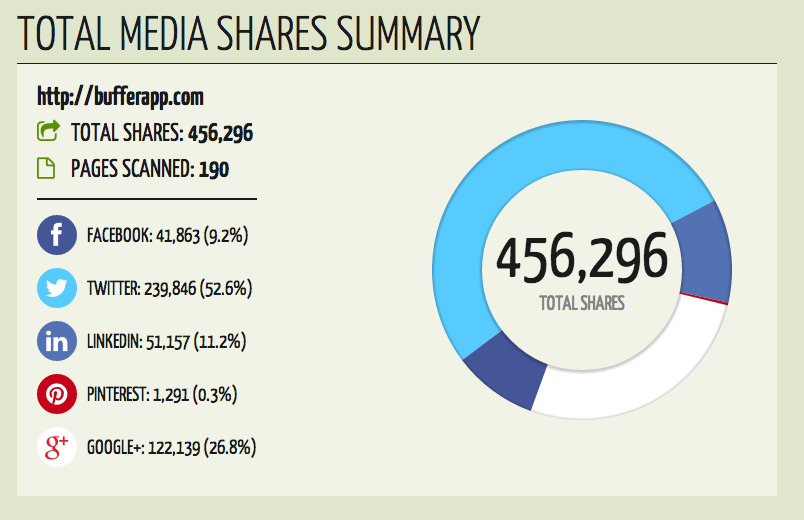
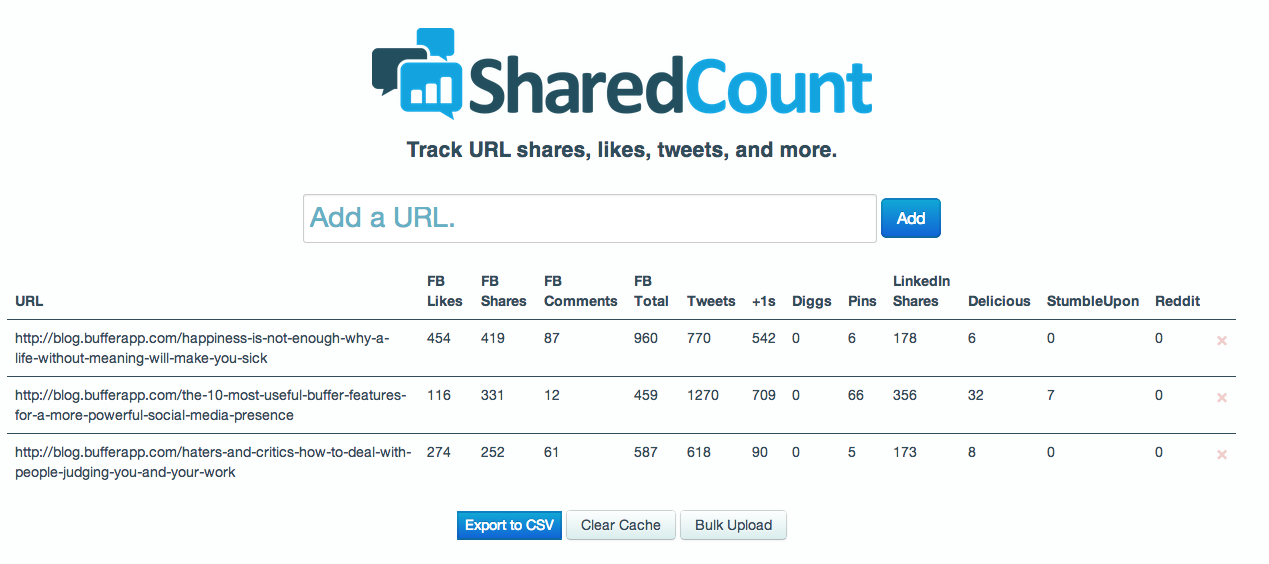
Want to see how your content (or anyone else’s, for that matter) has spread across the web? For sites that don’t display social media share button numbers, just paste the web address intoSharedCount. Or use the multi-URL dashboard to enter lots of different web addressed and export a quick report.
Screen Shot 2014 02 09 at 5.21.53 PM 520x231 29 free Internet tools to improve your marketing starting today